
This is the world's best lemon drizzle cake! It's truly the zingiest, most delicious and moreish cake you’ll ever make. The recipe is easy to follow and the crumb is incredibly soft and tender. It genuinely rivals Mary Berry's lemon drizzle cake.

So does this lemon drizzle cake live up to its name? Actually, yes. It's exceptionally gorgeous as over 300 FIVE STAR reviews will confirm! Just have a look at the comments to see how much everyone loves this recipe.
I've been making this Great British Bake Off worthy recipe for years, ever since it was emailed over to me by lovely reader Jayne Crammond, way back in 2012! Jayne explained:
I chose this recipe because I spent ages trying to find a lemon cake that was...well, lemony enough! I like my lemon cake to be very zingy and moist so I ended up taking bits of different recipes and putting them together to make this one, which is probably the one and only time I’ve been vaguely inventive in the kitchen.
- Ingredients
- Equipment
- Step-by-step instructions
- How to serve lemon drizzle cake?
- Ingredient notes & substitutions
- Equipment notes
- Allergen & Dietary Information for Lemon Drizzle Cake
- Troubleshooting Lemon Drizzle Cake
- How to store, keep & freeze lemon drizzle cake
- How to make different size and shape lemon drizzle cakes
- Print this lemon drizzle cake recipe
An Easy One Bowl Recipe
You'll make the batter in a single large bowl with the simplest dry and wet ingredients - no need for a separate bowl at any point!
To start, you'll whisk butter and sugar together, then beat in two eggs before folding in self-raising flour.
You'll then add the zest of two lemons and the juice of one to make the batter super citrusy. Your mouth WILL water. You'll then pop the cake mixture in a tin and bake this easy lemon drizzle cake!

While your lemon drizzle cake is baking, you'll make an incredible syrup to drizzle over the top. It's as simple as just popping some icing sugar and lemon juice (yep, more lemon!) in a pan and briefly boiling to a thin syrup. When your cake comes out of the oven, you'll then skewer it all over (a cocktail stick works well too!) and then pour on the zesty, tangy lemon syrup.
The only really difficult thing with this recipe is waiting until it's cool so that you can pop it out of the tin and devour! The sticky, zesty lemon glaze top is an absolute delight.

Are you ready to enjoy a soft, buttery, melt-in-the-mouth lemon drizzle cake? Here's what to do to make this traditional British dessert and find out why it's my favourite cake of all time.
Ingredients
- 170 g (⅔+¼ cup) white caster sugar (superfine sugar)
- 170 g (1½ sticks) salted butter
- 2 medium free range eggs
- 170 g (1 cup + 3 tbsp) self-raising white flour (self rising flour) sifted
- 3 unwaxed lemons (A standard UK lemon gives about 2 tbsp of juice. If yours are larger, adjust accordingly)
- 4 tbsp icing sugar (powdered sugar)
You'll find notes on each ingredient, plus substitutions, further down the page.
Equipment
- Wooden spoon or silicone spatula
- Round 20cm (8") nonstick cake tin or larger up to 23cm (9") for a thinner cake.
You don’t need any specialist equipment to make this lemon drizzle cake. There are tips on cake tins and mixing further down the page.

Step-by-step instructions
Grease and line your nonstick cake tin. If you don't have any greaseproof paper / parchment paper, greasing and then dusting with flour can help prevent sticking. Some swear by a caster sugar and flour mixture for dusting - it's up to you!
Preheat the oven to 180C (160C fan, 350F). Weigh the sugar and butter into a large mixing bowl.

Beat together until fluffy.

Add both eggs.

Whisk through.

Add the sifted flour - the last of the dry ingredients.

Fold until smooth.

Add the zest of two lemons and the juice of one to the mixture.

Gently stir through.

Spoon the batter into the prepared cake tin. I recommend using a loose-bottomed springform tin as it makes it super easy to get your cake out of the tin cleanly.

Note: I'm using a 23cm (9 inch) tin in these images, which gives a wide, shallow cake that can absorb lots of syrup all the way through. In the video, I've used an 18cm (7 inch) tin. See the cake tin size section below for advice on adjusting the cooking times.
Bake in your preheated oven for 25-30 minutes - the wider the tin, the shorter the cooking time. The lemon sponge should be golden on the outside and a skewer pushed into the centre of the cake should come out clean - keep an eye on it as you don't want it to over-bake.

To make the syrup, in a small saucepan, mix the juice of two of the lemons with the icing sugar.

Place over a medium low heat and stir until the sugar has dissolved, then bring to a boil for 1-2 minutes until you have a light syrupy texture.

Poke holes all over the warm sponge with a skewer, almost down to the bottom.

Take the syrup off the heat (careful, it's hot!) and pour all over the sponge while it's still warm, so the syrup soaks in evenly. Leave the cake in the tin while you do this so that you don’t lose any of the syrup as it seeps through the cake.

Allow the hot cake to cool, then remove from the tin and cut into generous slices. This cake has quite a delicate crumb, so be sure to let it cool completely before serving.

The result is a light, firm sponge that's wonderfully lemony. Perfect.
Enjoy with a hot cup of tea or coffee and savour this beautifully moist cake right down to the last slice.
This lemon drizzle really is a perfect cake - no wonder Brits consider it a total classic!

How to serve lemon drizzle cake?
My personal preference for enjoying a slice of lemon drizzle cake is with a big mug of tea!
For me, I don’t need anything else to accompany my lemon drizzle: the moistness and sweetness of the sponge is all you need on your plate.
However, if you want to add a little something extra when serving, then vanilla ice cream or whipped cream are both delicious additions too, lending a creaminess to offset the zing of the lemon drizzle.

Ingredient notes & substitutions
Lemons
You can use any type of lemon you like in this lemon drizzle cake but they should be unwaxed as you'll be zesting them. I do prefer using freshly squeezed lemon juice as the flavour is more vibrant but you can use bottled lemon juice if you prefer. Avoid using lemon extract or essence as the flavour won't be vibrant and it doesn't tend to taste natural.
Lemons can vary in size and therefore give different amounts of juice. A standard UK lemon, as used in this recipe, gives about 2 tbsp of juice. If yours are larger or smaller, adjust accordingly.
When you zest your lemons, you should make sure to only take the yellow part of the lemon skin. The white pith will make the cake taste bitter. I tend to use a fine grater for this (such as a microplane) and it does the job beautifully.
Remember, too, that lemons are truly the star of the show in this recipe, so while standard lemons are absolutely fine to use and give a wonderful result, investing in good quality lemons will make the cake extra special.

Eggs
In the UK, medium eggs weigh 53g - 63g (1.9oz - 2.2oz) and large eggs typically weigh 63g - 73g (2.2oz - 2.6 oz). If you want to use large eggs, beat them separately, then weigh 125g (4.4oz) into your cake bowl.
I haven't tested an egg free version, but you could try one of the following as a starting point:
- Store-bought egg replacement powder (use as directed on the packet).
- 1 tablespoon of crushed chia or flax seeds mixed with 2 tablespoons of water and left for 10 minutes in the fridge.
- 3 tablespoons of aquafaba.
- 3 tablespoons of applesauce.
- Half of a medium sized banana, mashed. It's best to use fairly ripe bananas for this as they will mash more easily and bind your ingredients together more effectively.
Butter
If you don’t want to use butter in this lemon drizzle cake, you can substitute for the same amount of flavourless oil, standard margarine or Stork. Aim for one with a high fat content, ideally around 80%. Light margarines tend to have a high water content which can upset the balance of the batter, thus affecting the final bake.

Flour
You’re going to want this lemon drizzle cake to rise, so you’re going to need a raising agent. Using self-raising flour is the simplest way to do this.
If you don't have any self-raising flour, you can make your own. Simply add two teaspoons of baking powder to every 150g (1 cup) of plain flour in a bowl and sift them together before using in your recipe.
This particular recipe uses 170g (1 cup + 3 tbsp) self-raising flour, so if you use plain flour instead, you’ll need to add about 2 ¼ tsp of baking powder.

Sugar
The crystals of caster sugar/superfine sugar are very small which helps them to dissolve more easily, but granulated sugar, golden caster sugar and brown sugar will all work, they’ll just give a slightly different texture. Do not use icing sugar / powdered sugar in the sponge as the crystals are too fine.
Sugar lends not only sweetness, but also structure and texture to the cake, so I wouldn’t recommend leaving it out or reducing the quantity. I have not experimented with artificial sweeteners, but I suspect it would be tricky to balance the lemon out - let me know if you experiment with it.
Icing sugar (another name for powdered sugar) is used to make the syrup that is drizzled over the cake. If you don’t have any, you can use granulated or caster sugar, you will just need to be patient as you warm the syrup as it will take longer for the sugar crystals to fully dissolve.

Can I make the lemon drizzle cake topping crunchy?
If you want a really crunchy lemon drizzle topping instead of a syrup that sinks in, you’ll need to change the method slightly.
Use granulated sugar instead of icing sugar and without any heat, mix your lemon juice and sugar together to form a paste, then spread over the warm cake with the back of a spoon. This should give you your zesty crunchy topping once cooled.

Equipment notes
Cake Tin Size
The only thing you might not already have is a springform tin - that is, a tin with a loose bottom and a clip on the side to make it super easy to get your cake out of the tin cleanly. If you don’t want to invest in a springform tin, a loose-bottomed one will do the job.
I like a wide cake tin as it gives a shallow cake that can absorb lots of syrup deep into the sponge but you can use any size tin you like, just bear in mind that it will affect the cooking time.
If you're using a 23cm (9 inch) tin, your cake will probably take around 25 minutes. An 18cm (7 inch) tin may take around 30 minutes, while a very small tin which makes the batter much deeper might take up to an hour.

Mixing
You can use a stand-type electric mixer, but it’s not really necessary. An electric hand whisk does the job well, beats in lots of air and makes for easy clean up. You can absolutely do the job by hand too, it’ll just take a little more elbow grease!
Whatever method you use to combine the butter, sugar and eggs, it’s important that you gently fold the flour in by hand. Beating can easily overwork the cake batter, which could make your finished bake tough and/or poorly risen if the blades knock out the air and stretch the gluten.
Allergen & Dietary Information for Lemon Drizzle Cake
This lemon drizzle cake is totally nut-free. However, with all allergies and sensitivities, it’s important to check the packaging of all of the ingredients you use very carefully to ensure they are nut-free.
Vegetarian & vegan lemon drizzle cake
This recipe is suitable for vegetarians as it contains no meat, fish or poultry. But it is not vegan due to the use of eggs and butter.
I haven't tested a vegan version, but as a starting point, you'd need to replace the butter with a good quality vegan butter (around 80% fat is ideal) and the eggs with one of the egg alternatives listed above.
Double check all of your ingredients labels to make sure that they are suitable for vegetarians. Don't forget to also check anything extra you intend to serve the recipe with.

Troubleshooting Lemon Drizzle Cake
Why is my lemon drizzle cake dry? Why does it have hard edges?
If your cake seems dry or hard, the most likely explanation is that it’s overbaked. This could be because the temperature in your oven was too high, or the cake was baked for too long.
You’re looking for a cake that is light golden in colour and looks even from edge to edge. When you insert a flat skewer into the centre of the cake, it should come out clean. If anything has stuck to the skewer then the cake needs longer in the oven.
Why did my lemon drizzle cake batter split/curdle?
If your batter seems to have gone watery and lumpy, or resembles scrambled egg, then it has probably split. It usually happens when you add cold eggs to room temperature butter and sugar. The three ingredients are supposed to form an emulsion as they are beaten together, but the difference in temperature can prevent that.
To avoid splitting your batter, aim to remove the quantity of eggs and butter you’ll need from the fridge before you start baking and leave them to come up to room temperature. Overmixing can also lead to a split batter, so as soon as it looks lump free, stop beating.
If your mixture does start to split, try adding a spoonful of flour (from the 170g total you’re planning to use). This can help encourage the emulsion to come back together, then you can fold in the rest of the flour. If it won’t come back together, don’t worry! Just carry on with the recipe according to the instructions. You may get a slightly more uneven bake and/or a lower rise but it should still be delicious!
Why did my lemon drizzle cake fail to rise/was flat/sank in the middle?
If you ever have any sort of sponge that fails to rise, it’s usually for one of these reasons.
- Oven too hot: Oven temperature is crucial to a good result. Your oven may be running hotter than the dial suggests, meaning the cake rose too fast to support its own weight. This is often the cause when a cake sinks in the middle.
- Over-beaten batter: If you beat too much air into the cake, it can rise too fast and then collapse.
- Opening or slamming the oven door: Opening the oven door during baking can cause the temperature to drop rapidly, causing the cake to lose height. Closing it too roughly can also knock the air out.
- Wrong size tin: Using a too narrow tin can mean that the mix is too deep to cook all the way through and so isn’t able to hold its structure.
- Too much flour or old flour: A thick batter with too much flour won’t rise as well, and can give a dense sponge, so check that your quantities are correct. Self-raising flour also has a shorter shelf life than plain flour, so make sure yours is in date or it may have lost some of its effectiveness.
Note: this is supposed to be a shallow, wide cake as shown in the pictures, which allows the drizzle to fully penetrate. If you want a taller cake, see the cake tin size notes above.

How to store, keep & freeze lemon drizzle cake
Stored in an airtight container in a cool place out of direct sunlight, your lemon drizzle cake will keep well for 3-4 days.
You can store your lemon drizzle cake in a sealed container in the refrigerator if you like, but it’s likely that the crumb will lose a little of its tenderness and become sort of grainy. For this reason, I think this lemon drizzle cake is better stored at room temp to preserve its tender crumb.
You can easily freeze lemon drizzle cake successfully. Make sure to place it in an airtight container. I find the best way to freeze is to first cut the cake into individual slices. That way, you can just grab a slice when you want and allow it to gently defrost before eating.
If you find your freezer is prone to freezer burn (where the food gets a frost on it and seems damaged) then you can go an extra step and double wrap the cake well in plastic wrap / cling film before placing in an airtight container.

How to make different size and shape lemon drizzle cakes
If you want to make a bigger or smaller version of this lemon drizzle cake, it's certainly possible. Look for the servings number near the top left of the recipe card below. Hover or tap over it and a little slider will pop up. So for instance, if you want to make a cake that's double the size, you'd change the servings number from 12 to 24 and all the ingredient quantities will update automatically for you.
It's important to note that if you're making more/less batter, it's going to change the cooking time. Make sure you have an appropriately sized tin and keep an eye to make sure you don't under or over bake your delicious lemon drizzle cake.
I have dedicated recipes to make this cake as a loaf cake, cupcakes or traybake:


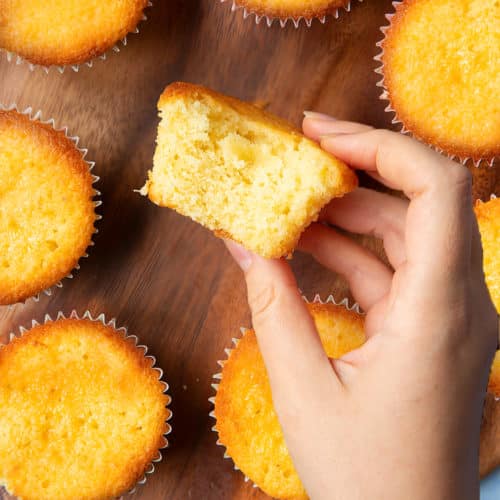
Lemon drizzle layer cake
You can use this recipe to make a layer cake! I would make double the quantity of batter and bake in two 18cm (7inch) tins, then make double the lemon drizzle syrup to drizzle on to them.
Once cooled, they'd be great sandwiched and covered with cool lemon frosting or even cream cheese frosting.

Where does lemon drizzle cake come from?
Lemon drizzle cake is thought to be an English invention going back at least a few hundred years! It was recently voted England's favourite cake flavour and I can see why. It’s zingy, zesty, sweet and delicious.
Lemon drizzle cake no doubt takes inspiration from classic 'pound cake' recipes (that's a cake made with a pound of flour, a pound of sugar, a pound of fat and a pound of eggs), but it’s the addition of lemon in the sponge and in the syrup added at the end that makes it really special.
Print this lemon drizzle cake recipe
If you'd like to print this recipe to try later, just hit PRINT on the recipe card below.

World's Best Lemon Drizzle Cake Recipe
Ingredients
- 170 g (⅔+¼ cup) white caster sugar (superfine sugar)
- 170 g (1½ sticks) salted butter
- 2 medium free range eggs
- 170 g (1 cup + 3 tbsp) self-raising white flour (self rising flour) sifted
- 3 unwaxed lemons (A standard UK lemon gives about 2 tbsp of juice. If yours are larger, adjust accordingly)
- 4 tbsp icing sugar (powdered sugar)
Equipment
- Wooden spoon or silicone spatula
- Round 20cm (8") nonstick cake tin or larger up to 23cm (9") for a thinner cake.
Instructions
- Grease and line your nonstick cake tin. If you don't have any greaseproof paper, greasing and then dusting with flour can help prevent sticking.
- Preheat the oven to 180C (160C fan, 350F). Put the sugar and butter in a large bowl and whisk together until fluffy.
- Add both eggs and whisk in.
- Sift in the flour and fold until smooth.
- Add the zest of two lemons and the juice of one to the mixture and gently mix through.
- Spoon the batter into a greased and lightly floured cake tin. I recommend using a nonstick loose-bottomed or springform tin as it makes it super easy to get your cake out of the tin cleanly.
- Bake for 25-30 minutes. (The wider the cake tin, the quicker it will cook). The cake should be golden on the outside and the skewer should come out clean - keep an eye on it as you don't want it to over-bake.
- In a small pan, mix the juice of two of the lemons with the icing sugar.
- Place over a medium low heat and stir until the sugar has dissolved, then bring to a boil for 1-2 minutes until you have a light syrupy texture.
- Poke holes all over the warm sponge with a skewer, almost down to the bottom.
- Take the syrup off the heat (careful, it's hot!) and pour all over the cooling sponge.
- Allow to cool, then cut into generous slices and enjoy with a hot cup of tea or coffee.
Video
Notes
Nutrition
Pin this lemon drizzle cake for later

Looking for more baking inspiration?
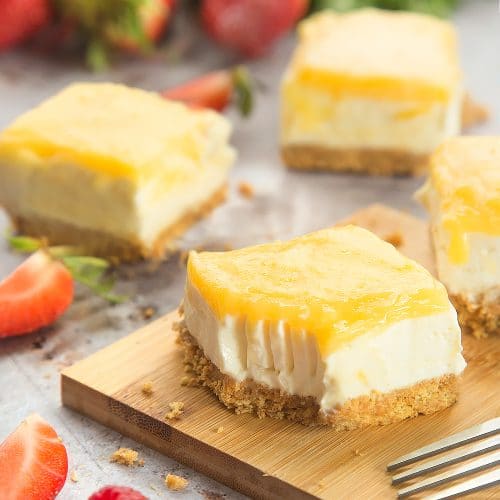
Try these incredibly delicious lemon bakes recipes next.



Have you got my book?

'This is a great kids cookery book. Emily is a star' - Simon Rimmer
'The book I'd like to force into any mother's kitchen' - Prue Leith
"A fab book with a plan." - Jane Devonshire, 2016 Masterchef UK winner
'Emily has managed to combine her mummy knowledge and passion for food to make a truly helpful and brilliant cookbook' - Priya Tew, RD, BSc (Hons), Msc
Get Your Kids to Eat Anything is an achievable 'how to' for parents in the battle to overcome picky eating and 'make new the norm'. Emily Leary's unique 5-phase programme looks at the issue of 'fussy eating' in a holistic way that links imagination with food, and which situates parents alongside - not in opposition to - their children.
Sarah says
Wonderful recipe! Love it!
Linda says
This truly is in my opinion the best lemon cake! I have made this several times now and it is always consistent, everything is covered in this recipe so you can’t really go wrong and it tastes amazing ! Has a beautiful texture, crumbly, buttery, moist, just make sure you have enough people to share it with or you may find yourself eating way too much!
Thank you!
Thomas Harris says
Absolutely divine, such a good recipe and so easy to follow, I made it with my two kids 6yr & 3yrs and they were able to follow every step with me, it came out perfectly. I love how the recipe explains simple alternatives and changes if you have different tins sizes or ingredients available. And it tastes sensational, yea the hardest part really is waiting for it to cool down enough to eat